
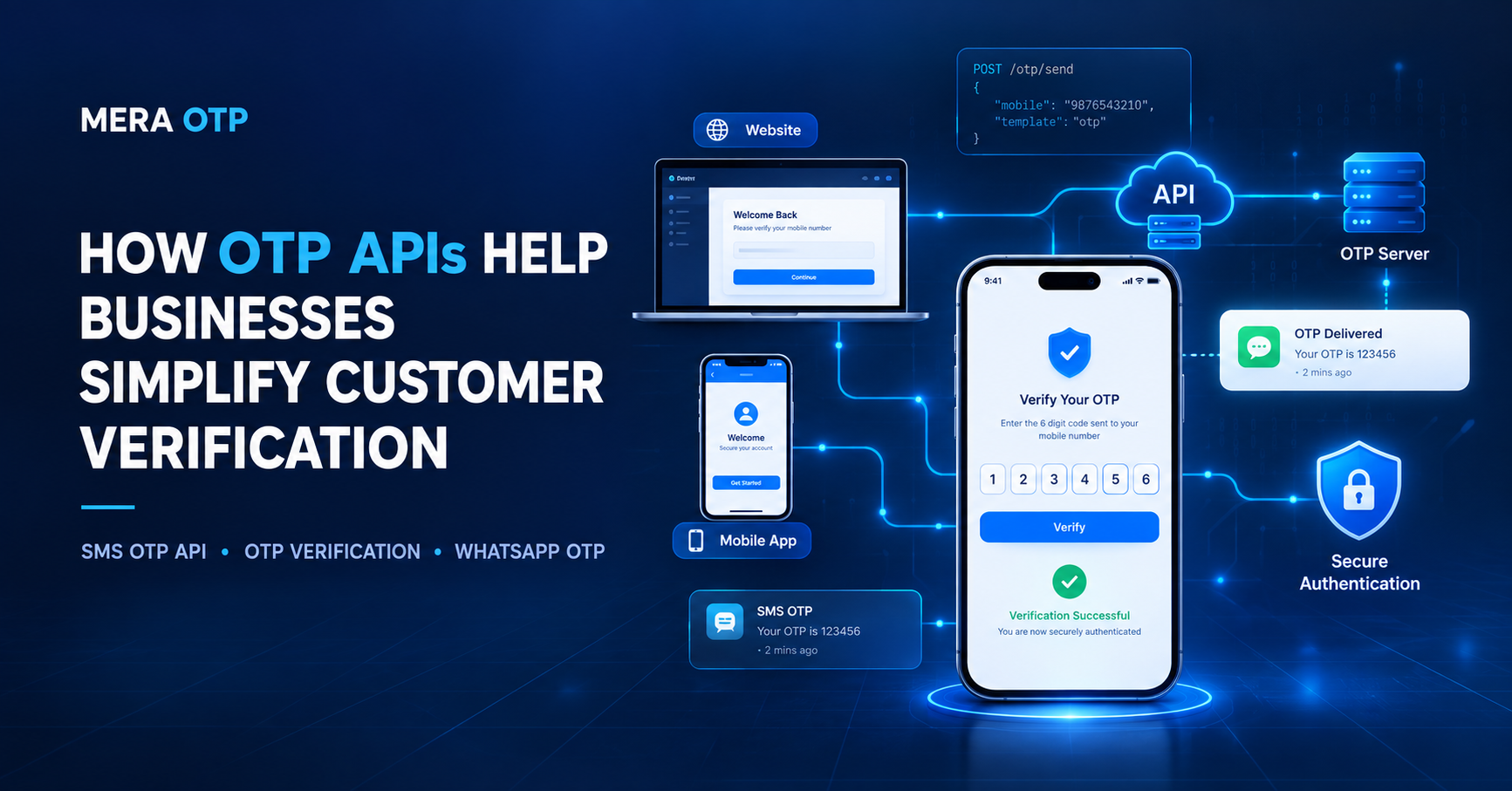
How OTP APIs Help Businesses Simplify Customer Verification
Customer verification is an important part of many websites, mobile applications, and online services. Businesses need a simple and reliable way to verify users during registration, login, account recovery, transactions, and other important actions.
This is where an OTP API can help.
An OTP (One-Time Password) API allows businesses to send temporary verification codes to users through channels such as SMS and WhatsApp. Instead of building an entire OTP delivery system from scratch, businesses can integrate an API into their website or application and automate the verification process.
For Indian businesses, an SMS OTP API can provide a practical way to add OTP verification to websites, mobile apps, and other digital platforms.
What Is an OTP API?
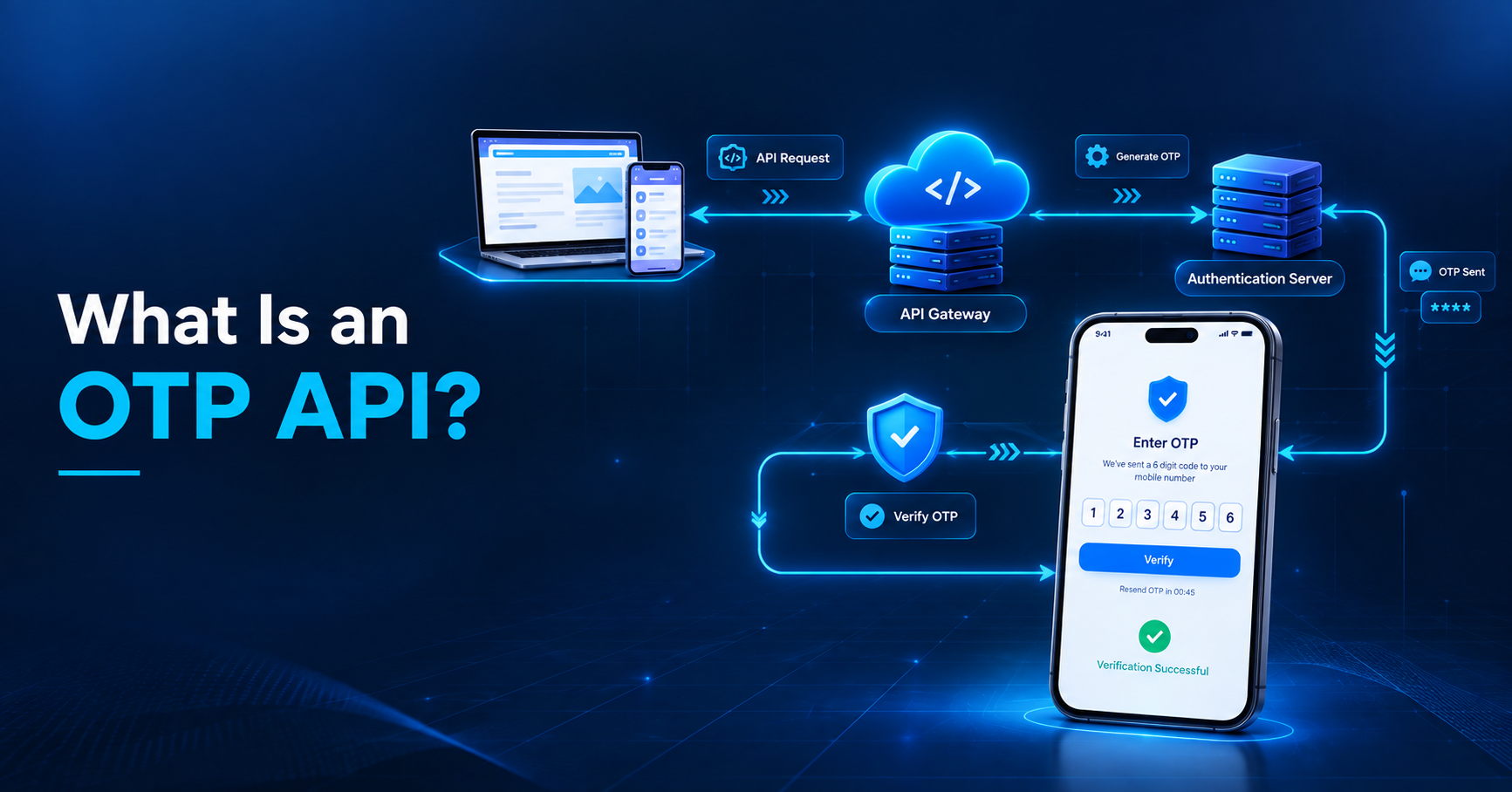
An OTP API is a technology that allows an application or website to request and deliver one-time passwords to users.
For example, when a customer enters their mobile number while creating an account, the application can send a request to the OTP API. The API processes the request and sends a verification code to the customer's registered mobile number.
The user then enters the OTP on the website or application, where it can be verified.
A typical OTP verification process looks like this:
User enters mobile number → OTP is generated → OTP is delivered → User enters OTP → OTP is verified
This process can be integrated into websites, mobile applications, login systems, registration forms, and other digital services.
How Does OTP Verification Work?
OTP verification generally follows a simple process.
1. User Enters Their Mobile Number
The customer enters their mobile number on a website or mobile application.
2. Application Requests an OTP
The website or application sends a request to the integrated OTP API.
3. OTP Is Delivered
The verification code is sent to the user's registered mobile number through the configured messaging channel.
4. User Enters the OTP
The customer enters the received OTP into the verification screen.
5. OTP Is Verified
The application checks the submitted OTP and completes the verification process when the code is valid.
This automated approach can reduce the need for manual verification and create a smoother customer experience.
Why Do Businesses Use SMS OTP APIs?
Many businesses use OTP verification as part of their customer authentication process.
An SMS OTP API can be integrated into different types of digital platforms, including:
- Business websites
- Mobile applications
- Customer registration systems
- Login and authentication systems
- Account recovery processes
- Customer onboarding workflows
- Online platforms and web applications
Instead of developing an SMS delivery system independently, businesses can use an API-based solution that connects their existing application with OTP messaging infrastructure.
Benefits of an OTP Verification API
- Faster Customer Verification
OTP verification can help customers complete registration and authentication without complicated verification steps.
- Easy API Integration
A well-designed OTP API can be integrated into websites and applications using standard API requests and documentation.
- Automated Verification
Once integrated, the OTP process can be automated, reducing repetitive manual work for businesses.
- Support for Digital Applications
Businesses can integrate OTP functionality into both websites and mobile applications, depending on their technical requirements.
- Better User Experience
A straightforward OTP verification flow can make registration and login processes easier for customers.
- SMS OTP vs WhatsApp OTP
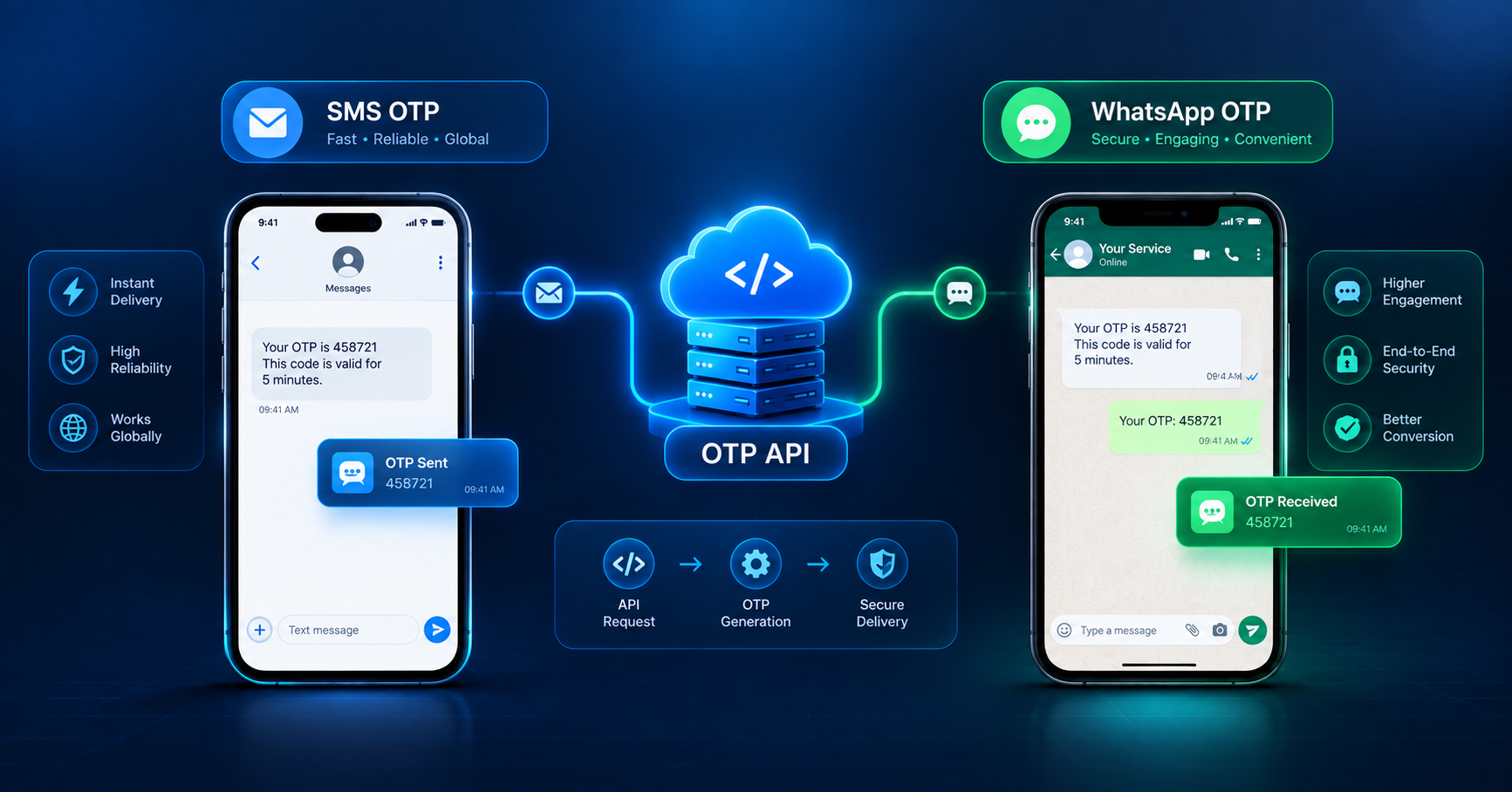
Businesses may use different communication channels depending on their customers and application requirements.
- SMS OTP
SMS remains a commonly used channel for OTP verification. It can be useful when businesses want to send verification codes directly to a customer's mobile number.
- WhatsApp OTP
WhatsApp can provide another communication channel for customer verification where supported and configured appropriately.
A business may choose SMS OTP, WhatsApp OTP, or other messaging solutions based on its application, customer communication requirements, and available integrations.
- OTP APIs for Websites and Mobile Apps
Modern businesses often operate across multiple digital platforms. An OTP API can help connect authentication workflows with these platforms.
For example, a business may use OTP verification for:
- Website registration
- Mobile app login
- New customer verification
- Password or account recovery
- Customer onboarding
- Authentication workflows
With API-based integration, developers can connect OTP functionality directly to the existing application instead of creating a separate verification system for every platform.
What Should You Look for in an OTP Service Provider?
Choosing an OTP service provider involves more than simply checking whether OTP messages can be sent.
Businesses should consider factors such as:
API Documentation
Clear API documentation makes it easier for developers to understand endpoints, parameters, authentication, and integration requirements.
Integration Support
Developers may need assistance while integrating an OTP API with their website or application. Technical support can therefore be useful during implementation.
Messaging Options
Businesses may have different communication requirements. Depending on the service, available options can include SMS OTP, WhatsApp OTP, and other messaging solutions.
Scalability
Businesses handling a growing number of users should consider whether the service can support their expected messaging requirements.
Delivery and Status Information
Useful messaging APIs can provide information related to requests and delivery status, helping businesses monitor their communication workflows.
How Mera OTP Helps Businesses
Mera OTP provides messaging and verification API solutions designed for businesses that need OTP and customer communication capabilities.
The platform focuses on services such as:
- SMS OTP
- OTP verification APIs
- WhatsApp OTP API
- RCS messaging
- Bulk WhatsApp messaging
- Messaging APIs for websites and applications
Businesses can use API-based integrations to connect these communication capabilities with their existing websites, mobile applications, and business systems.
The goal is to make customer verification and messaging easier to integrate without requiring businesses to build every messaging component from the beginning.
Common Use Cases of OTP APIs
OTP APIs can be used in many different business workflows.
User Registration
Businesses can verify a customer's mobile number when creating a new account.
Login Verification
OTP authentication can be used as part of a website or mobile application's login process.
Account Recovery
Businesses can use OTP verification when customers need to recover or verify access to an account.
Customer Onboarding
OTP verification can be included during customer onboarding to confirm contact information.
Application Authentication
Mobile and web applications can integrate OTP APIs into their authentication workflows.
Why API-Based Verification Is Useful for Growing Businesses
As a business grows, manually managing customer verification can become difficult. An API-based approach allows developers to connect verification functionality directly with existing systems.
For example, instead of manually sending or checking verification information, the application can automatically request an OTP, deliver it to the customer, and process the verification response.
This can help create a more structured and automated authentication workflow.
Frequently Asked Questions
What is an OTP API?
An OTP API is an application programming interface that allows websites and applications to generate, send, and verify one-time passwords as part of a customer authentication process.
What is an SMS OTP API?
An SMS OTP API allows a website or application to send OTP verification codes to users through SMS.
Can OTP APIs be used with mobile applications?
Yes. OTP APIs can be integrated into mobile applications as part of registration, login, authentication, and account recovery workflows.
What is an OTP verification API?
An OTP verification API provides the functionality required to send and verify one-time passwords within a website, application, or digital platform.
Can businesses use WhatsApp for OTP verification?
Businesses can use WhatsApp-based OTP solutions where the required WhatsApp messaging setup and applicable policies support the use case.
Is API integration difficult?
The complexity depends on the application and the API. Clear documentation, standard API endpoints, and technical support can make integration easier for developers.
Conclusion
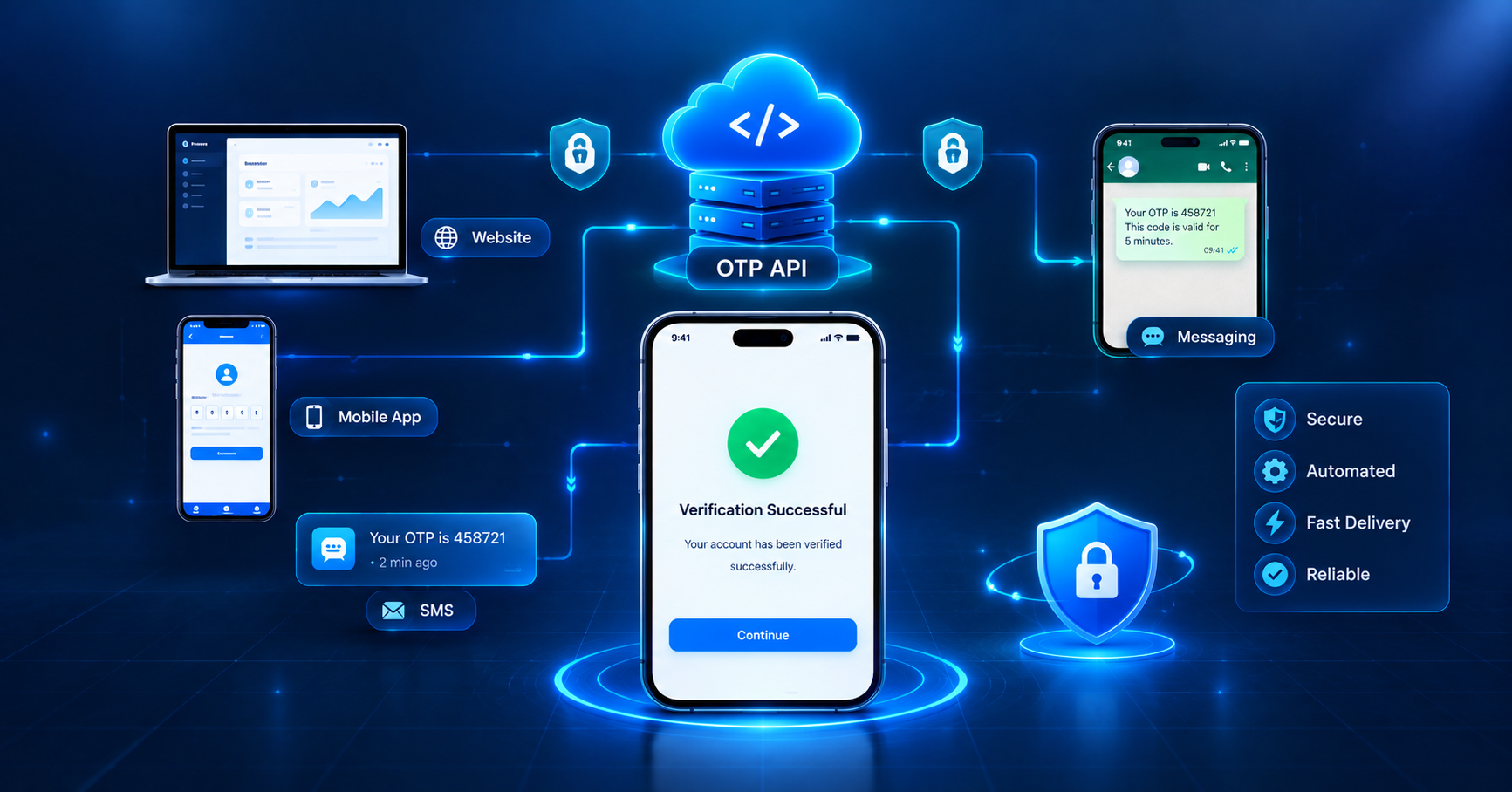
Customer verification is an important part of many digital businesses. An OTP API can help businesses automate verification workflows and connect OTP functionality with their websites, mobile applications, and other digital platforms.
From SMS OTP API integration to WhatsApp-based messaging and other communication solutions, businesses can choose the approach that fits their customer and application requirements.
Mera OTP provides API-based OTP and messaging solutions that businesses can integrate into their existing digital platforms, helping developers build structured customer verification and communication workflows.