
Introduction
In today's digital world, OTP (One-Time Password) verification plays an important role in securing websites, mobile applications, and online business platforms. From user registration and login authentication to password recovery and transaction verification, OTPs help businesses protect their customers and simplify authentication.
However, many startups, developers, and small businesses face challenges when setting up SMS OTP services because of DLT registration requirements, sender ID configuration, and message template approvals.
This has increased interest in an OTP API Without DLT solution that offers a simpler way to implement OTP verification in business applications.
Businesses looking for an OTP API should understand the available delivery methods, telecom compliance requirements, and integration options before selecting a service provider.
What Is an OTP API Without DLT?
An OTP API Without DLT generally refers to an OTP delivery solution that allows businesses to integrate OTP verification without independently managing the traditional DLT registration process for their own SMS sender identity.
An OTP API connects your website or application with an authentication system that generates and delivers one-time passwords to users.
Depending on the delivery channel and provider's infrastructure, businesses may be able to use alternative authentication methods without directly using their own DLT-registered SMS setup.
For example, OTP verification can be implemented through:
- SMS-based OTP delivery
- WhatsApp OTP verification
- Email OTP authentication
- In-app OTP verification
Important: In India, TRAI requirements apply to commercial SMS communication. Businesses should verify the delivery provider's compliance arrangements. An API provider cannot automatically make regulated SMS traffic exempt from DLT requirements simply by advertising it as DLT-free.
Why Do Businesses Look for OTP Without DLT Registration?
Setting up an OTP system can be challenging for businesses that are launching a new website, mobile application, or digital platform.
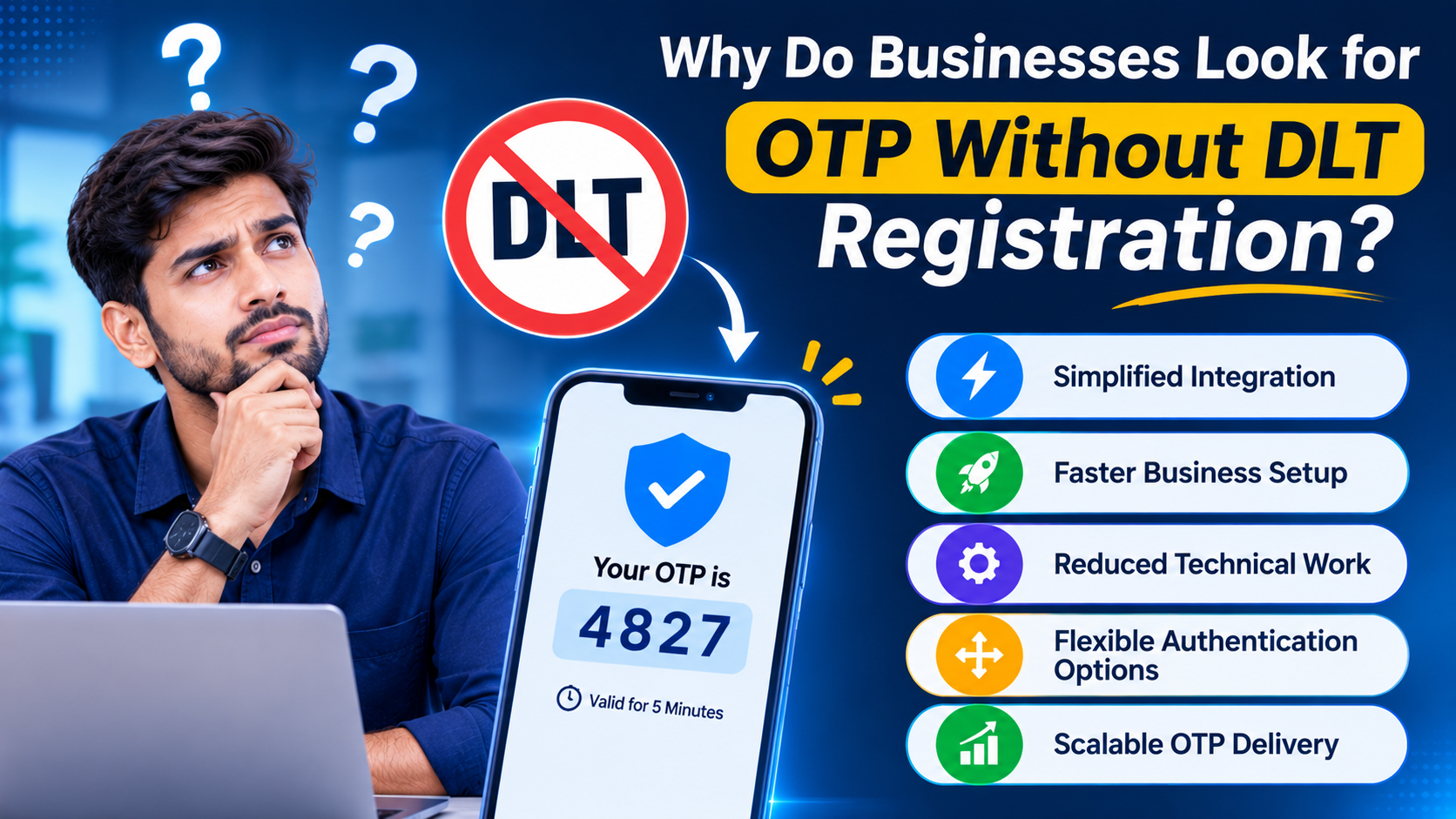
Some common reasons businesses explore OTP API solutions include:
1. Simplified Integration
Developers want an authentication system that can be connected to their existing applications without complicated technical processes.
2. Faster Business Setup
Startups and small businesses often want to launch their products quickly. A ready-to-integrate OTP API can simplify the initial authentication setup.
3. Reduced Technical Work
Instead of building an OTP generation and verification system from scratch, developers can use an API to manage authentication workflows.
4. Flexible Authentication Options
Businesses may need SMS, WhatsApp, or email-based OTP delivery depending on their customers and application requirements.
5. Scalable OTP Delivery
Growing applications need an authentication system capable of handling increasing user registrations, login requests, and verification traffic.
How Does an OTP Verification API Work?
An OTP verification API connects your application with an OTP generation and delivery system.
The typical workflow includes the following steps:
- A user enters their mobile number on your website or application.
- Your application sends an OTP request to the API.
- The OTP system generates a temporary verification code.
- The selected delivery channel sends the OTP to the user.
- The user enters the received OTP.
- Your application verifies the submitted code.
- If the OTP is correct and valid, the user is authenticated.
This automated process reduces manual verification and makes user authentication easier.
Key Features to Look for in an OTP API
Before choosing an OTP API provider, businesses should evaluate the following features.
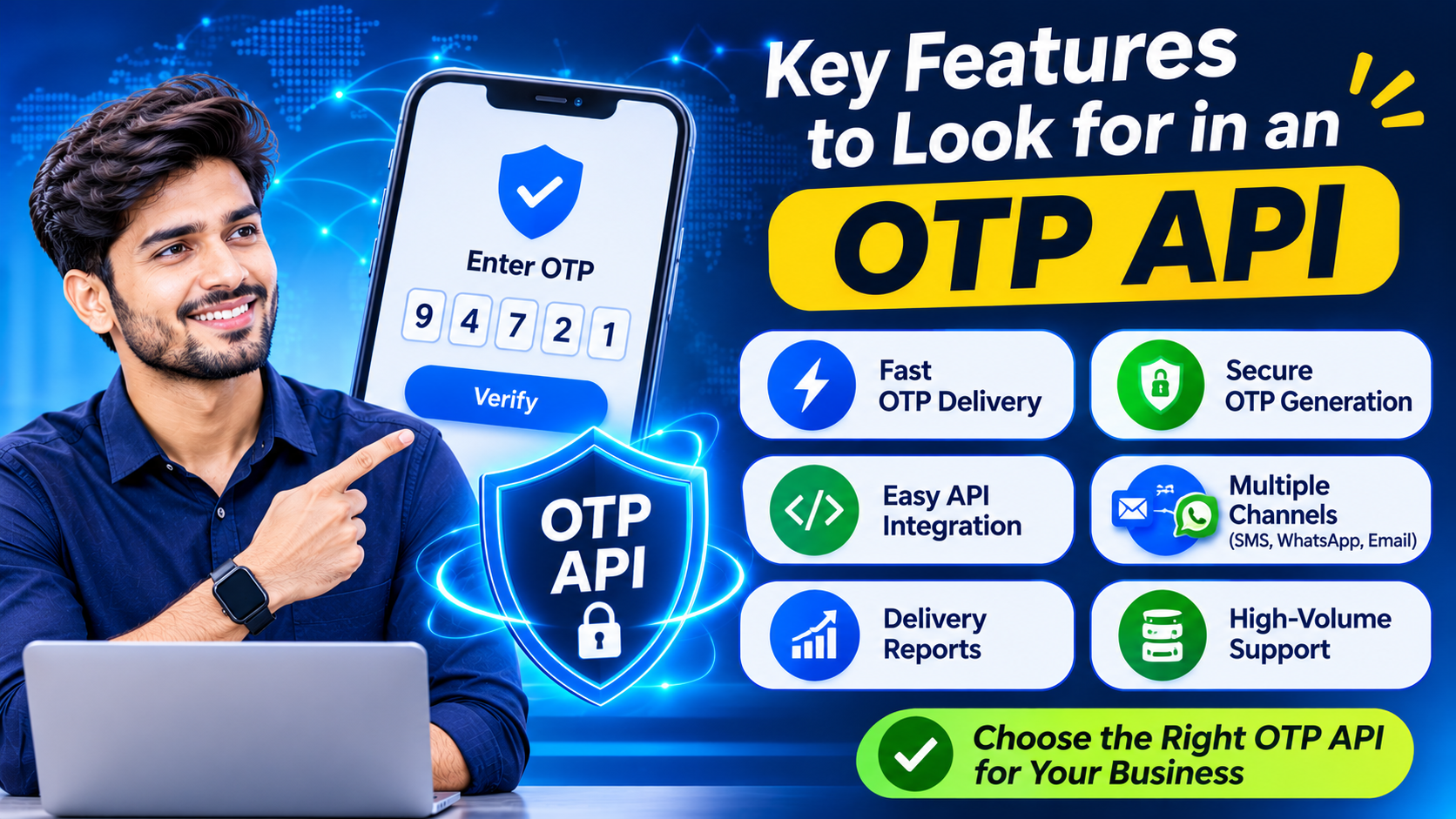
Fast OTP Delivery
OTP delivery speed is important for applications where users need immediate verification. Look for a provider with reliable delivery infrastructure and delivery monitoring.
Secure OTP Generation
The system should generate random, time-limited OTPs and prevent unauthorized verification attempts.
Easy API Integration
A developer-friendly API should include proper documentation, authentication methods, request parameters, and response codes.
Multiple Authentication Channels
Support for SMS, WhatsApp, and email OTP can provide additional flexibility for different business requirements.
Delivery Reports
Delivery status and API logs help developers identify failed requests and troubleshoot authentication problems.
High-Volume Support
Businesses with thousands of users should select an OTP solution that can handle growing verification requirements.
OTP API Without DLT vs Traditional DLT-Based SMS Setup
Businesses should understand the difference between using a third-party OTP API and managing their own DLT-based SMS setup.
| Feature | Traditional SMS Setup | OTP API Solution |
|---|---|---|
| Integration | Requires SMS integration | Ready API integration |
| OTP Generation | Depends on implementation | Can be managed by API |
| Sender Configuration | DLT-related configuration | Depends on provider's setup |
| Development Work | Depends on infrastructure | Can reduce development work |
| Delivery Channels | SMS | Depends on API support |
| Scalability | Depends on provider | Depends on API infrastructure |
Note: Using an OTP API does not remove applicable telecom compliance obligations. The actual SMS delivery arrangement must be verified with the service provider.
Who Needs an OTP API Without DLT?
An OTP API can be useful for different types of businesses and digital applications.
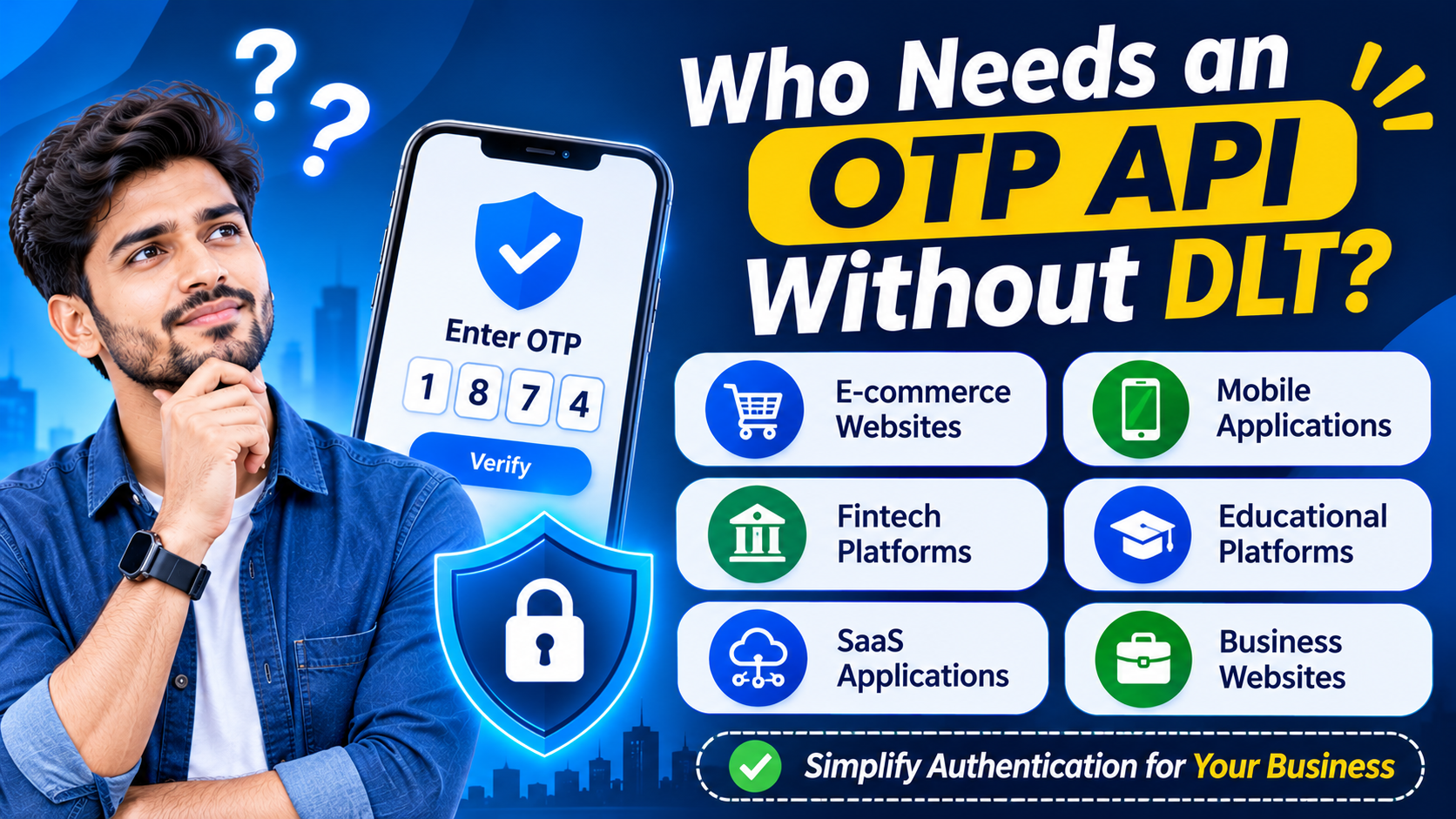
E-commerce Websites
E-commerce platforms use OTP verification for customer registration, login authentication, and account security.
Mobile Applications
Mobile app developers can integrate OTP authentication to verify users during account creation and login.
Fintech Applications
Financial technology platforms use authentication workflows to protect user accounts and sensitive operations. Additional regulatory and security requirements may apply.
Educational Platforms
Online learning platforms can use OTP verification to authenticate students, teachers, and registered users.
SaaS Applications
Software-as-a-Service businesses can use OTP authentication to improve account security and simplify user onboarding.
Business Websites
Websites offering online services, customer accounts, and digital products can integrate OTP APIs for user verification.
How to Choose the Right OTP API Provider in India?
Selecting the right OTP API provider is important for maintaining reliable authentication.
Consider these factors before making a decision:
- Delivery Reliability: Check the provider's delivery performance and network coverage.
- API Documentation: Make sure developers can easily understand and implement the API.
- Security: Look for OTP expiry, rate limiting, and protection against repeated verification attempts.
- Pricing: Compare the cost of OTP messages and available subscription plans.
- Technical Support: Choose a provider that offers assistance during integration and troubleshooting.
- Compliance: Verify how the provider handles applicable Indian telecom regulations and DLT requirements.
Why Choose a Professional OTP API Solution?
A professional OTP API solution can simplify authentication for businesses that want to provide a smooth user experience.
Instead of developing the complete OTP infrastructure independently, businesses can connect their applications with an existing API platform.
This can help reduce development effort, simplify integration, and provide access to authentication features through a centralized system.
The right solution should offer reliable delivery, secure verification, clear documentation, and transparent compliance practices.
Conclusion
OTP verification is an essential part of modern websites and mobile applications. Businesses searching for an OTP API Without DLT should focus on finding a solution that simplifies integration while following the applicable telecom regulations in India.
Whether you are developing an e-commerce platform, mobile application, SaaS product, or business website, choosing the right OTP API can help improve user authentication and create a smoother registration and login experience.
Evaluate the available delivery channels, security features, API documentation, and compliance arrangements before selecting your OTP service provider.
Frequently Asked Questions (FAQs)
1. What is an OTP API Without DLT?
It generally refers to an OTP API solution that offers an alternative delivery arrangement without requiring the business to independently manage its own DLT SMS setup. Applicable telecom requirements still need to be followed.
2. Can I send SMS OTP Without DLT Registration in India?
Businesses should not assume that SMS OTP traffic is exempt from DLT registration. TRAI requirements apply to regulated commercial SMS communication, including OTP-related traffic. Confirm the provider's compliant delivery arrangement.
3. Can I integrate an OTP API into my website?
Yes. An OTP API can be integrated into websites, web applications, and mobile applications using API requests and server-side verification.
4. Is an OTP API suitable for startups?
Yes. Startups can use OTP APIs to implement user registration, login authentication, and account verification without developing an entire OTP infrastructure from scratch.
5. Which authentication channels can an OTP API support?
Depending on the provider, authentication channels may include SMS, WhatsApp, and email.
6. Is OTP API integration secure?
It can be secure when implemented correctly with encrypted connections, short OTP expiry periods, rate limiting, secure API credentials, and server-side OTP verification.